

Celotex Insulation Board
(25 Products)Celotex insulation boards are engineered to meet the varied demands of modern construction, offering tailored solutions for wall insulation, floor insulation, roof insulation, and cavity wall insulation. The hallmark of Celotex insulation is its unique combination of thermal efficiency, environmental sustainability, and ease of installation. Manufactured from polyisocyanurate (PIR), a closed-cell foam material, these boards feature one of the lowest thermal conductivity ratings available at 0.022 W/mK. This endows them with exceptional thermal resistance, helping buildings retain heat in winter and stay cooler in summer, which ultimately reduces energy consumption and lowers heating and cooling costs.


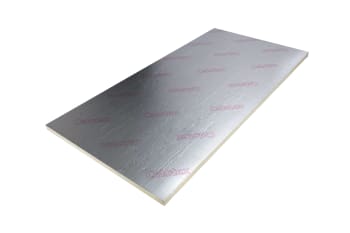

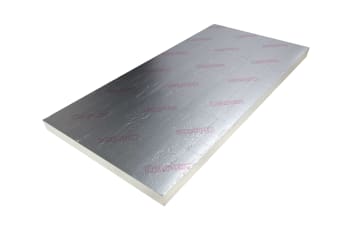
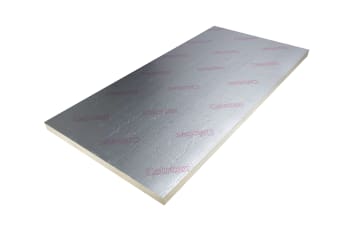


.jpg)
Understanding Celotex Insulation
Celotex is a leading UK manufacturer of PIR (polyisocyanurate) insulation boards, providing high-performance thermal solutions for roofs, walls, and floors. A subsidiary of the Saint-Gobain Group, Celotex specialises in rigid insulation products designed to improve energy efficiency in residential, commercial, and industrial buildings.
In an era where energy regulations are tightening and sustainability targets are becoming non-negotiable, Celotex insulation boards provide a solution that is both high-performance and future-proof. Designed for maximum thermal resistance with minimal thickness, these polyisocyanurate (PIR) boards offer an exceptional thermal conductivity rating of 0.022 W/mK, enabling architects and builders to achieve stringent U-value targets without compromising space or structural integrity.
By incorporating Celotex products into your project, you future-proof your building against rising energy costs, evolving sustainability standards, and increasingly stringent building regulations.
Benefits
- Moisture Resistance: Helps prevent the growth of mould and mildew, ensuring long-term performance in areas exposed to moisture.
- Sustainable and Eco-friendly: Low Global Warming Potential (GWP) and Zero Ozone Depleting Potential (ODP).
- A+ Green Rating: Achieves an A+ rating when compared to the BRE Green Guide 2008 - ideal for improving environmental performance and aiding in BREEAM assessments.
- Superior Thermal Performance: Low emissivity foil facings enhance the insulation's ability to reflect heat, improving thermal performance in cavity air spaces and reducing energy consumption.
- Lightweight & Easy to Handle: Lightweight nature simplifies cutting, handling, and installation, reducing labour costs and installation time.
- Versatility: Suitable for a wide range of applications, including walls, floors, and roofs, ensuring flexibility across different construction types and projects.
Sustainability
Celotex insulation boards are integral to achieving environmental and regulatory targets. Their zero Ozone Depletion Potential (ODP) and low Global Warming Potential (GWP) allow projects to exceed current building standards while making a measurable impact on reducing carbon footprints over a building's lifecycle.
Their inclusion in projects can be a differentiator when it comes to gaining BREEAM or LEED credits - two of the most widely recognised green building certifications in the world.
BREEAM (Building Research Establishment Environmental Assessment Method) and LEED (Leadership in Energy and Environmental Design) assess the sustainability and environmental impact of a building or construction project based on various factors such as energy efficiency, water usage, materials selection, indoor environmental quality, and more.
Applications
- Roof Insulation (Typical Thickness: 100mm - 150mm): Ideal for pitched roofs, flat roofs, and vaulted ceilings. Because roofs are highly prone to heat loss, thicker boards are generally required to meet target energy efficiencies. It is common to combine thicknesses (e.g., 100mm between rafters and 50mm below) to achieve superior thermal performance in both residential and commercial properties.
- Wall Insulation (Typical Thickness: 25mm - 100mm): Provides excellent temperature control for internal and external walls. Thinner boards (25mm - 50mm) are frequently used for internal dry-lining to preserve floor space, while thicker profiles (70mm - 100mm) suit external walls and timber frames.
- Floor Insulation (Typical Thickness: 50mm - 150mm): Prevents heat loss into the ground and improves overall thermal comfort. Standard suspended timber floors generally use 50mm to 100mm boards, while solid concrete floors often require up to 150mm. If you are insulating a specific underfloor heating system overlay, thinner boards (20mm - 30mm) are typically used.
- Cavity Wall Insulation (Typical Thickness: 50mm - 100mm): Specialised boards designed to neatly fill the gap between the inner and outer walls of a building. This drastically reduces the potential for condensation and mold. The exact thickness you need will depend on your existing cavity width, ensuring an adequate residual air gap is maintained.
Celotex Insulation Board Range
- TB4000 (Thermal Bridging): Available in thicknesses from 20mm to 40mm, the TB4000 range is perfect for reducing thermal bridging in construction, ensuring continuous insulation around structural elements like beams and studs.
- GA4000 (General Application): The GA4000 range is one of the most popular product lines in the Celotex range, providing versatile insulation solutions for general applications. It comes in thicknesses from 50mm to 100mm, with the GA4100 (100mm) being the most commonly used due to its compatibility with standard building practices.
- XR4000 (Extra Resistance): For projects requiring higher insulation performance, the XR4000 range offers thicker options, from 110mm to 150mm. These boards are designed for areas that demand more robust thermal performance, such as commercial buildings or highly insulated residential properties.
- CW4000 (Cavity Wall): Available in thicknesses ranging from 50mm to 100mm, the CW4000 range is specifically designed for cavity wall applications, helping to eliminate heat loss and improve overall building efficiency.
- PL4000 (Insulated Plasterboard): PL4000 is a combined product offering plasterboard bonded to PIR insulation, simplifying the installation process while maintaining excellent thermal properties. With thicknesses from 37.5mm to 72.5mm, this product is perfect for internal wall insulation in spaces where you need both insulation and a finished surface.
Frequently Asked Celotex Insulation Board Questions
How Is Celotex Insulation Board Made?
Celotex insulation boards are manufactured using a polyisocyanurate (PIR) foam core, which is renowned for its superior thermal performance. The production process begins with the combination of polyisocyanurate resin, blowing agents, and additives. These materials are mixed and subjected to a chemical reaction, which generates the foaming process that produces the board's cellular structure.
This cellular structure, with air pockets trapped inside, gives the board its remarkable thermal insulating properties. The foam core is then sandwiched between protective facings or laminates, which serve to enhance the board's durability, moisture resistance, and ease of handling.
The result is a lightweight yet highly effective insulation solution, combining strength, thermal efficiency, and durability in a way that few other insulation materials can match.
What is Celotex's Fire Classification?
Celotex PIR insulation boards are tested to BS EN 13501-1, with a fire classification of E. This classification indicates that the boards are combustible and will contribute to the spread of fire.
As a result, Celotex insulation boards should not be used in external facades of buildings over 18 metres in height in England and Wales, or over 11 metres in height in Scotland.
It is essential that, when using Celotex or any insulation material, you ensure your installation complies with all relevant national Building Regulations, guidance, and any applicable local standards or regulatory requirements for your specific construction or application.
Are Celotex Insulation Boards Waterproof?
Celotex PIR is a closed-cell, moisture-resistant insulation board, meaning it does not hold water or retain water.
Whilst this attribute helps to prevent water ingress - especially in the wall cavity, where this can be a persistent problem - it does not mean that Celotex insulation boards are suitable for external use.
Celotex insulation boards should only be installed inside the building structure, not on an external facade or inverted roof.
Do Celotex Insulation Boards Stop Damp?
No, Celotex boards will not stop damp; installing them over a wet wall traps moisture and makes the issue much worse.
You must fix the root cause first, then use a vapour barrier alongside your Celotex and ensure good ventilation to prevent future condensation.
Always consult a qualified builder or damp specialist to safely assess and resolve any moisture issues before starting your project.
How Do You Cut Celotex Insulation Boards?
To cut Celotex boards, use a sharp, fine-toothed hand saw or a specialist insulation saw to get a clean, straight edge. Always wear a dust mask and safety glasses to protect yourself from the fine dust created while cutting.
If you are unsure about fitting the boards tightly to prevent heat loss, always consult a building professional for advice.
Does Celotex Have Any Disadvantages?
Celotex's rigid shape makes it tricky to fit perfectly into uneven spaces, and it offers limited soundproofing compared to other materials.
Because strict fire safety regulations apply, always consult a building professional to ensure it is safe and compliant for your specific project.
Related Articles

Decking and Elevated Platforms: Structural Systems and Surface Finishes

How to Insulate a Shed

How to Insulate Under Floorboards Without Removing

Cavity Wall Insulation Installation

How To Build a Shed

How To Install Celotex Insulation Boards