

Sand for building, plastering and paving
(10 Products)Sand is available for bricklaying, screeding, plastering and paving, with a choice of sharp, soft building, plastering and kiln-dried grades. Formats include 20kg and 25kg bags, 800kg bulk bags and loose loads sold by the tonne, depending on the sand type.
Choose the sand to suit the work, then select the quantity you need.
- Sharp sand: For screeding, concrete mixes and suitable paving laying courses.
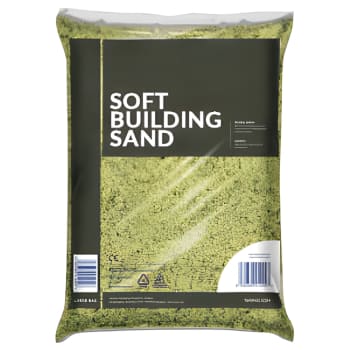
- Soft building sand: For bricklaying, blockwork and pointing mortar.
- Plastering sand: For sand-based plaster and render mixes.
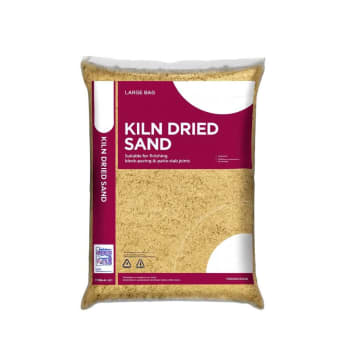
- Kiln-dried paving sand: For brushing into the narrow joints of suitable block paving.
Each sand has a different grading or preparation to suit its intended application.






Understanding Sand
Sand is a fine aggregate used in mortar, screed, concrete and render, as well as in paving construction. Its grain size, shape and grading influence how it mixes, compacts and finishes.
Sharp sand has a coarse, angular texture suited to screeding and other specified construction mixes. Soft building sand produces workable mortar for masonry, while plastering sand is washed and graded for plaster and render. Kiln-dried paving sand is prepared for dry joint filling between paving blocks.
Choosing the right material starts with its intended use. A sand selected for bricklaying mortar serves a different purpose from sand used beneath paving or brushed into the finished joints.
Material Range
- Sharp Sand: Coarse, angular sand for floor screeds, concrete mixes and suitable paving laying courses. Available in 25kg bags, 800kg bulk bags and loose loads sold by the tonne.
- Soft Building Sand: Fine-textured sand for workable bricklaying, blockwork and pointing mortars. Available in 25kg bags, 800kg bulk bags and loose loads sold by the tonne.
- Plastering Sand: Washed, fine aggregate for sand-based internal plastering and external rendering. Available in 25kg bags and 800kg bulk bags.
- Kiln-Dried Paving Sand: Fine, dry jointing sand for brushing into narrow block paving joints. Supplied in 20kg bags.
Comparing Sand Types
- Sharp Sand vs Building Sand: Sharp sand features larger, jagged particles that lock together, providing structural strength and binding for load-bearing mixes like concrete and floor screeds. Building sand consists of finer, rounded grains that produce a smooth, highly workable mortar ideal for bricklaying and pointing.
- Building Sand vs Plastering Sand: While both are fine aggregates, plastering sand is washed further to remove impurities, salt content, and larger grains, ensuring an exceptionally smooth consistency required for internal plaster finishes and external renders without tearing the surface during application.
Typical Applications
- Bricklaying and blockwork: Soft building sand forms the fine aggregate in mortar used to bed masonry units.
- Pointing and masonry repairs: Building sand is used in suitable mortar mixes for filling and finishing masonry joints.
- Floor screeding and concrete mixing: Sharp sand provides the fine aggregate where its grading suits the specified mix.
- Plastering and rendering: Plastering sand is mixed with the appropriate binder to prepare sand-based wall coatings.
- Paving construction: Suitable sharp sand can form a laying course beneath paving, while kiln-dried paving sand fills the narrow joints between blocks.
Calculating Your Sand Requirements
Accurate material calculation prevents site delays and reduces waste. To determine the necessary volume, measure the length, width, and required depth of the application area in metres, then multiply them together to find the cubic metre requirement.
For precise estimation tailored to specific quantities needed, utilise the dedicated materials calculators available directly on the individual product pages.
Application Depths
- Paving Laying Course: Typically requires a compacted depth of 30mm to 50mm of sharp sand.
- Floor Screeds: Generally applied at depths between 50mm and 75mm depending on the structural requirements and presence of underfloor heating.
- Mortar Joints: Standard brickwork and blockwork mortar joints are laid at a uniform depth of 10mm.
- Rendering: Applied in successive base and top coats, usually totalling 15mm to 20mm in depth.
Sand Pricing per Tonne
One of the most frequently asked questions during project preparation is how much a tonne of building sand costs. While market prices change depending on quarrying costs and regional haulage, purchasing by the loose tonne or bulk bag consistently delivers the lowest price per kilogram compared to smaller quantities. Because we constantly monitor the market, you will find the exact price per bulk bag and the price per tonne in pounds explicitly stated on the individual product pages, ensuring you always calculate your budgets using the most accurate and current live rates.
Performance Benefits
- Versatile Mixing: Compatible with standard Portland cements, hydrated limes, and chemical admixtures to create bespoke mortars and screeds.
- Consistent Grading: Manufactured to precise aggregate sizes to ensure uniform water demand and predictable setting times across all batches.
- Structural Integrity: Provides the essential aggregate skeleton required to prevent excessive shrinkage, cracking, and structural failure in cementitious mixes.
Specification & Standards
- BS EN 13139: Aggregates for mortar. Specifies the properties of aggregates obtained by processing natural materials, ensuring suitability for masonry and plastering.
- BS EN 12620: Aggregates for concrete. Defines the properties for aggregates used in concrete production, verifying the mechanical and physical properties necessary for structural integrity.
Related Materials and Construction Uses
Building sand and plastering sand are used with cement and, where specified, lime or suitable admixtures to prepare mortar and render. Sharp sand can be combined with cement for screeds or with cement and coarse aggregate for concrete, following the required mix design.
In paving construction, the sub-base, laying course and jointing material perform different jobs. MOT Type 1 may form the sub-base beneath a suitable laying course, while kiln-dried paving sand is used to fill narrow joints in compatible block paving systems.
Frequently Asked Sand Questions
What is the difference between building sand and sharp sand?
Building sand has a finer texture suited to workable bricklaying and pointing mortars. Sharp sand has coarser, angular grains and is commonly used in floor screeds, concrete mixes and suitable paving laying courses. Choose the type required by the mix or construction detail.
Is paving bedding sand the same as jointing sand?
Bedding sand forms the laying course beneath paving. Kiln-dried jointing sand is brushed into the narrow gaps between suitable paving blocks after laying. These materials perform different jobs, so the paving system should determine which sand is used at each stage.
Are all sands available in the same bag sizes?
No. Sharp sand and soft building sand are listed in 25kg bags, 800kg bulk bags and loose loads sold by the tonne. Plastering sand is listed in 25kg and 800kg bags, while kiln-dried paving sand comes in 20kg bags. An 800kg bulk bag contains 0.8 tonnes.
Related Articles

How to Install Block and Beam Flooring

How to Level a Garden

How to Lay a Patio On Soil

How To Repoint a Patio

How To Lay Block Paving

How To Lay A Patio

Top Dress A Lawn: The Easy Way

What Is Cement Made Of?

How To Make Cement

Builders Sand vs Sharp Sand