

8x3 Timber Treated C24
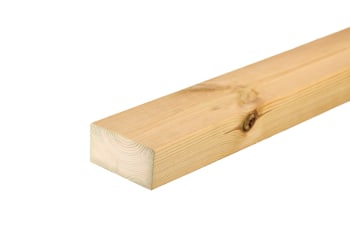
(7 Products)75mm x 200mm treated timber is an exceptionally robust structural section, engineered to provide maximum stiffness and load-bearing capacity across significant spans. Pressure-treated to ensure a high level of resistance against biological attack, these 8x3 lengths are essential for heavy-duty floor joists, flat roof systems, and substantial timber frameworks.
Understanding 8x3 Treated Timber
75mm x 200mm sawn treated timber, traditionally known by the nominal 8x3 inch trade size, is a foundational element in professional construction where standard 47mm widths are insufficient. These sections are kiln-dried to achieve high dimensional stability and are strength-graded to C24 specifications. This grading ensures the timber possesses the density and structural integrity required for safety-critical applications, offering superior mechanical performance with fewer knots and physical flaws compared to standard carcassing.
The timber undergoes a high-pressure preservative treatment process, which forces protective chemicals deep into the wood fibres. This treatment is vital for protecting the material from fungal decay and wood-boring insects, particularly in applications where the timber may be subject to moisture or restricted ventilation.
With a finished size of approximately 72mm x 195mm, these lengths are regularised for consistency. The planed finish and eased edges allow for a high degree of accuracy when levelling floor planes and constructing plumb vertical frames, while also improving the safety and ergonomics for the installer on-site. The 75mm thickness provides a significant bearing surface, which is critical for distributing heavy loads in structural assemblies.
Material Range
- Individual 75mm x 200mm Lengths: Heavy-duty structural pressure-treated lengths available in 3.6m, 4.2m, 4.8m, and 6m sizes to meet diverse engineering specifications.
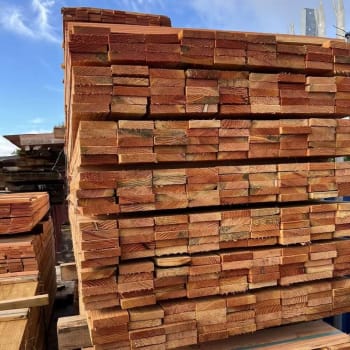
- Bulk 8x3 Timber Packs: Trade-scale 35-length packs designed for large-volume installations, providing a cost-effective supply for primary floor and roof structures (available for 3.6m, 4.8m, and 6m lengths).
Performance Benefits
- Superior Load Capacity: Graded to sustain significant dead and imposed loads across wider spans than standard 2-inch timber sections.
- Biological Protection: Pressure-treated to resist rot, decay, and insect infestation, ensuring the longevity of the building’s structural skeleton.
- Enhanced Stability: The kiln-drying process removes excess moisture, ensuring the timber remains straight and stable after installation.
- Precision Regularisation: Planed on all four sides with eased edges to ensure uniform dimensions and improved site handling.
Typical Applications
- Primary Floor Joists: Supporting internal flooring in large residential rooms or commercial spaces requiring minimal vibration.
Flat Roof Frameworks: Providing the deep profile and wide bearing surface necessary for roof decks and insulation layers. - Structural Mezzanines: Creating high-strength secondary floor levels in industrial or retail environments.
- Heavy-Duty Timber Framing: Constructing load-bearing external walls and heavy-duty internal partitions.
- Loft Conversions: Providing the structural foundation for new floor planes in residential conversions.
Specification & Standards
- BS EN 14081-1: Strength graded structural timber with rectangular cross section.
- BS EN 335: Durability of wood and wood-based products – Use classes.
- BS 8417: Preservation of wood – Code of practice for professional treatment.
Related Materials and Construction Uses
These 75mm x 200mm sections are the primary choice for installers who require premium structural wood with high density and strength. In complex builds, these heavy-duty sections are often integrated with other specialist joist timber products to create a complete, high-performance structural system that resists deflection over long spans.
Due to the weight and structural importance of these sections, they must be installed with appropriately rated heavy-duty galvanised hangers and bridging to prevent lateral movement. To maintain the integrity of the pressure treatment, any on-site cuts or notches must be thoroughly treated with a suitable end-grain preservative to prevent moisture ingress.
Frequently Asked 8x3 Questions
How Is 8x3 Timber Sized On Materials Market?
Here at Materials Market, we list timber sizes in a couple of different ways. Timber lengths are usually referred to in imperial terms (inches rather than millimetres) and are characterised by their width and height. The most popular way we refer to size is in inches like '8 x 3' but we also use metric, which measures in millimeters (mm).
For 8 x 3 timber this would be 200mm x 75mm or 72mm x 200mm. We sell 75mm x 200mm on this website and this is used interchangeably with 8 x 3 to refer to the same size of product. The slight discrepancy of 3mm between 47mm (finished size) and 50mm (nominal size) just means that the finish at the ends is a lot more even and easier to work with.
Whatever your project, our site is proud to present a wide range of standard sizes for easy fitting; offering timber products that will be of interest to both new and seasoned builders.
Is It Possible To Paint 8x3 Timber C24?
Pressure-treated wood can be painted or stained, but to get a finish that lasts and looks premium, you'll first need to evaluate the moisture content of the timber.
Once you are sure the timber is dry, you can then move on to using a suitable primer and paint finish. We recommend using a latex primer with compatible exterior latex paint—water-based paint. Oil-based paints are not recommended.
Am I Able To Cut Treated Timber To My Preferred Size?
Yes, it is possible to cut treated timber, provided that you have all the appropriate power tools, eye protection, and a respirator to hand before cracking on. Donning the correct PPE is essential as the cutting process releases tiny airborne particles of wood, possibly impregnated with the chemicals used in pressure-treating.
Treated wood also cuts a little more like wet wood so some extra care should be afforded to ensure the blade doesn’t slip while cutting.
Related Articles

Timber Frame Construction

Timber Sizing

C16 vs C24 – What’s The Difference?