

Chipboard Sheets
(10 Products)Chipboard sheet materials offer versatile, cost-effective structural and non-structural timber panels for construction, flooring, and interior fit-outs. Ranging from high-density load-bearing flooring to furniture-grade boards and finished shelving, these engineered wood sheets provide reliable stability across both dry and humid internal environments.


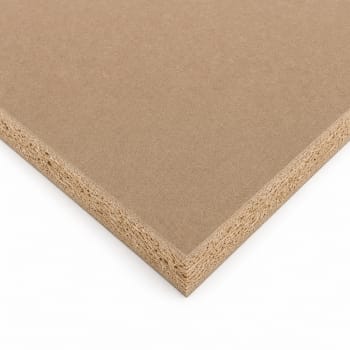

Understanding Chipboard
Engineered from compressed wood particles and synthetic resin binders, chipboard delivers a highly stable and uniform sheet material without the natural defects found in solid timber. The manufacturing process allows for precise grading, creating distinct densities and formulations tailored to specific load-bearing or cosmetic requirements across domestic and commercial environments.
Our current range spans three primary use cases: structural flooring, furniture manufacturing, and decorative shelving. Moisture-resistant P5 grades and advanced coated boards are specifically formulated to withstand high humidity and occasional water exposure during the building phase. Conversely, standard P2 grades and melamine-faced options provide excellent internal stability for dry interior environments, ensuring a smooth, consistent surface for cabinetry and storage solutions.
By selecting the correct board grade for the intended application, trades and self-builders can ensure long-term structural integrity and aesthetic quality. Whether bridging flooring joists or constructing bespoke wardrobes, the specified particleboard provides a reliable, flat, and workable substrate.
Material Range
- P5 Moisture-Resistant Flooring: High-density, load-bearing tongue and groove panels designed for flooring applications in humid or dry conditions, featuring solutions such as standard P5 T&G chipboard and Egger Protect.
- Advanced Exterior-Grade Flooring: Weather-protected structural boards engineered for extended exposure during construction, featuring solutions such as Peel & Clean exterior chipboard flooring.
- P2 Furniture Grade Boards: Standard-density, non-structural panels engineered for interior joinery and dry-environment fabrication, featuring our P2 furniture grade chipboard sheets.
- Melamine-Faced Shelving: Pre-finished, wipe-clean decorative boards with factory-bonded surfaces for immediate internal use, featuring White Melamine Faced Chipboard Double Sided Shelving.
Performance Benefits
- Uniform Consistency: Engineered composition eliminates natural knots, voids, and grain variations, ensuring predictable cutting and machining across every sheet.
- Dimensional Stability: Controlled manufacturing processes create flat, rigid panels that resist warping and twisting when installed in their intended environments.
- Workability: Easily cut, routed, and drilled using standard woodworking tools and machinery without splintering along grain lines.
Sustainable Composition: Manufactured using recycled wood chips and sawmill offcuts, providing an environmentally efficient and sustainable alternative to solid timber panels.
Typical Applications
- Suspended Timber Floors: Spanning across traditional timber joists or engineered I-joists to create rigid, load-bearing domestic flooring.
- Floating Floors: Installed over concrete subfloors and acoustic underlays to provide a smooth, flat finish for final floor coverings.
- Cabinetry and Carcasses: Constructing internal frameworks, wardrobes, and kitchen units where a stable, paintable, or veneer-ready surface is required.
- Storage Systems: Creating continuous, pre-finished shelving runs in cupboards, utility rooms, and retail spaces.
Specification & Standards
- BS EN 312: Dictates the performance requirements and grading system (e.g., P2, P5) for chipboard based on load-bearing capacity and moisture resistance.
- BS EN 13986: Specifies the characteristics, evaluation of conformity, and marking required for timber panels used in building applications.
Related Materials and Construction Uses
Chipboard panels integrate seamlessly into wider timber frame and masonry construction systems. When laying P5 tongue and groove flooring, the boards are typically installed alongside specialised D4 polyurethane wood adhesives to bond the joints, seal the edges, and prevent floor squeaks.
In ground-floor applications, they work directly above damp proof membranes and rigid PIR insulation boards to form thermally efficient floor cassettes. For interior fit-outs and joinery, P2 and melamine-faced boards are frequently assembled using mechanical fixings, cam dowels, and edge banding to create highly durable domestic furniture and storage configurations.
Frequently Asked Chipboard Questions
What is a chipboard?
Chipboard, universally known as particleboard, is an engineered wood product manufactured by mixing wood chips, sawmill shavings, and sawdust with a synthetic resin binder. This mixture is then pressed under heat to form rigid, flat sheets used throughout the construction and furniture industries.
Are chipboard and MDF the same?
No, they are distinctly different materials. Chipboard is manufactured from visible, coarse wood chips and shavings, making it lighter and highly cost-effective for structural floors and standard carcasses. Medium Density Fibreboard (MDF) is manufactured from fine wood fibres, resulting in a significantly denser, smoother board with no visible wood particles, making it ideal for intricate routing and painting.
What is chipboard called in the UK?
In the UK construction industry, it is universally referred to as chipboard or particleboard. Specific grades are most frequently referred to by their BS EN 312 classification by tradespeople, such as P5 (moisture-resistant structural flooring) or P2 (non-structural interior furniture grade).
How much is an 8x4 chipboard?
Pricing varies significantly based on the specific grade, sheet thickness, and performance characteristics required. Standard P2 furniture boards offer an economical price point, while advanced moisture-resistant P5 flooring and protective weather-coated boards command a higher price reflective of their structural and resistant capabilities. Exact pricing for specific thicknesses and pack sizes is displayed directly on our individual product pages.
How do you cut chipboard sheets?
Sheets can be easily cut using standard woodworking hand saws, circular saws, or jigsaws. For the cleanest edge—especially critical on melamine-faced boards - it is recommended to use a fine-toothed blade, apply masking tape along the cut line to prevent the decorative face from chipping, and ensure the board is fully supported throughout the cut.
How do you protect chipboards from water?
For construction phases exposed to the weather, specifying a pre-coated or peel-and-clean protective chipboard is essential. Standard interior boards can be protected against light moisture by applying appropriate water-resistant paints, varnishes, or edge sealants. However, unless the board is a specified moisture-resistant grade (such as P5), it should never be exposed to direct water or persistent high humidity.
Related Articles

The Ultimate Guide to Sheet Materials: Types, Applications & Selection

Chipboard Explained: The Complete Guide to Particle Board & Flooring Sheets

OSB or Chipboard For Loft Flooring?

How To Board A Loft

Painting Chipboard: Transforming Your Surfaces

Chipboard vs MDF: Unveiling the Differences and Making the Right Choice