

C24 Timber
(104 Products)C24 timber provides a premium, high-strength solution for demanding load-bearing projects like floor joists and roof rafters. Our range includes fully strength-graded, kiln-dried sections in a wide variety of dimensions, from 4x2 up to 10x2, and 4x3 up to 9x3.
While C24 is essential for supporting heavy point loads across wide spans, not every framework requires this top-tier specification. If you are constructing standard internal stud walls or non-load-bearing partitions, you can reduce your project costs without sacrificing quality by exploring our range of C16 timber.
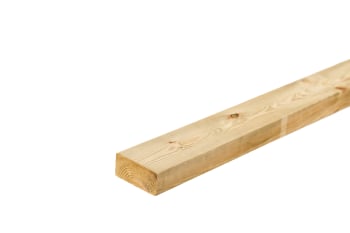

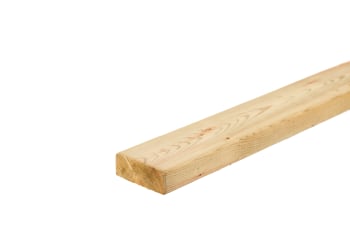


Understanding C24 Timber
The "C" stands for coniferous (softwood), and the "24" reflects its high characteristic bending strength.
This exceptional strength comes from how and where the trees are grown. Sourced from colder climates, the wood grows much slower, creating a dense, incredibly tight grain with very few knots or physical defects. This naturally superior stiffness makes it the go-to choice for wide, clear spans that standard timber simply cannot support safely without intermediate bracing.
Furthermore, because the timber goes through a strict drying process before it is graded, it is highly dimensionally stable. This means it strongly resists the twisting, bowing, and shrinking often seen in lower-grade alternatives once installed.
Material Range
- 2-Inch Structural Joists: High-performance C24 graded sections available in depths ranging from 4x2 to 10x2, suitable for primary floor and roof structures.
- 3-Inch Heavy-Duty Sections: Thicker structural timber designed for increased load distribution and stability, featuring sizes from 4x3 up to 9x3.
Performance Benefits
- Superior Strength: C24 grading offers higher load-bearing capacities and better elasticity than standard C16 timber.
- Dimensional Stability: Kiln-drying ensures the timber maintains its shape and reduces shrinkage once installed within a building envelope.
- Consistency: Slower-grown fibre results in fewer knots and defects, ensuring uniform performance across every length.
- Compliance: Fully graded to meet the structural requirements of UK Building Regulations for domestic and commercial projects.
Typical Applications
- Floor Joists: Creating robust horizontal platforms for upper floors in residential and commercial builds.
- Roof Rafters: Forming the primary structural skeleton for pitched roof systems, supporting both insulation and tiling loads.
- Timber Frame Construction: Constructing load-bearing internal and external wall panels.
- Mezzanine Floors: Providing the structural framework for elevated storage or office areas in industrial units.
Specification & Standards
- BS EN 14081-1: Timber structures. Strength graded structural timber with rectangular cross section.
- BS EN 338: Structural timber. Strength classes.
- BS 5268-2: Structural use of timber. Code of practice for permissible stress design, materials and workmanship.
Related Materials and Construction Uses
C24 timber is designed to function as the core component of a structural carcass. It is frequently used in conjunction with joist hangers, framing anchors, and high-tensile bolts to create secure mechanical connections. To protect the integrity of the timber in external walls or suspended ground floors, it is often installed alongside damp-proof courses (DPC) and breathable membranes to prevent moisture transfer.
In flooring applications, these joists are typically finished with structural-grade chipboard or plywood deckings. When used in roof or floor zones, the voids created by the C24 sections are ideal for the installation of acoustic or thermal insulation, as well as the routing of essential building services.
Frequently Asked C24 Timber Questions
Is c24 timber treated?
"C24" refers strictly to the timber's strength grade, not its treatment. Because of this, you can buy C24 timber both treated (for damp or outdoor applications) and untreated (for dry, internal use).
How can you tell if C24 timber is treated?
Treated C24 timber typically has a noticeable green or brown tint due to the chemical preservatives, compared to the pale, natural colour of untreated wood.
Is c24 dry graded timber?
C24 timber is always dry graded. This means it has been kiln-dried (often stamped with "KD" or "DRY") to a low moisture content before being tested for strength. This drying process makes the wood significantly stronger, more dimensionally stable, and far less likely to warp or shrink once installed.
Related Articles

How To Build A Decking

How To Build A Stud Wall

How To Build A Pergola

Timber Sizing

C16 vs C24 – What’s The Difference?