

Block Paving Sand
(4 Products)Block paving sand provides the essential foundation and finishing layers required for a durable, professional driveway or patio installation. The range includes high-quality sharp sand in bulk bags, 25kg units, and loose loads for structural bedding, alongside 25kg bags of kiln dried sand specifically for jointing.



Understanding Block Paving Sand
Block paving sand is divided into two distinct types based on its role within the paving system: the bedding layer and the jointing layer. You are correct in your assessment: sharp sand is the industry standard for the bedding layer. Its coarse, angular grains lock together under compaction to create a rigid, well-drained "cushion" that supports the weight of the blocks and any vehicular traffic without shifting.
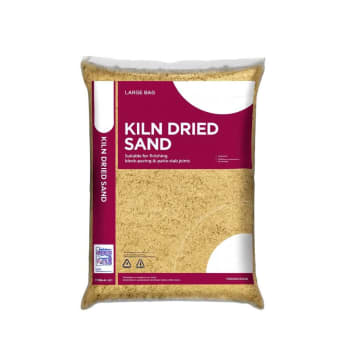
The final stage of installation requires kiln dried sand. This is a very fine, clean, and moisture-free silica sand that is brushed over the surface of the blocks once they are laid. Because it is completely dry, it flows easily into the narrow gaps between the pavers. Once the area is vibrated with a plate compactor, this sand wedges the blocks together, creating "frictional interlock" which prevents the blocks from moving laterally and helps to distribute loads evenly across the entire paved surface.
Using the correct sand for each stage is vital for the longevity of the project. Sharp sand provides the necessary drainage and structural support beneath the blocks, while kiln dried sand ensures the joints remain tightly packed to prevent the ingress of debris and to maintain the structural integrity of the finished surface.
Material Range
- Sharp Sand: Coarse, angular sand used to create a 30mm to 50mm bedding layer, available in 800kg Bulk Bags, 25kg bags, and loose loads for larger projects.
- Kiln Dried Sand: Fine-grade, moisture-free silica sand supplied in 25kg bags, designed specifically for brushing into joints to stabilise block paving.
Performance Benefits
- Structural Stability: Sharp sand provides a non-compressible base that resists rutting under heavy loads.
- Frictional Interlock: Kiln dried sand fills joints completely to lock blocks in place and prevent shifting.
- Efficient Drainage: The permeability of the sand layers allows surface water to filter through to the sub-base, reducing ponding.
- Ease of Application: Kiln-dried properties ensure the jointing sand remains free-flowing for fast and thorough filling.
Typical Applications
- Paving Bedding: Creating the primary levelling layer for domestic driveways, paths, and commercial pedestrian areas.
- Joint Stabilisation: Filling the narrow gaps between block pavers to ensure the structure remains rigid.
- Re-sanding: Maintenance of existing block paving where original jointing sand has been washed away or removed during cleaning.
- Screeding: Levelling surfaces in preparation for various types of external masonry and slab laying.
Specification & Standards
- BS EN 12620: Aggregates for concrete (Specifies requirements for sand used in construction).
- BS 7533-3: Pavements constructed with clay, natural stone or concrete pavers. Code of practice for laying.
Related Materials and Construction Uses
Block paving sand is the final structural component used over a prepared sub-base, typically consisting of compacted MOT Type 1. To ensure the sharp sand bedding layer does not migrate into the sub-base, a geotextile membrane is often laid between the two layers.
Once the blocks are laid and the kiln dried sand has been applied, some installers choose to apply a block paving sealer. This clear coating helps to set the jointing sand in place, preventing it from being removed by wind or pressure washing, and protects the sand from weed seeds and oil staining. The sand works in conjunction with concrete or clay pavers and edge restraints to form a complete, load-bearing system.
Related Articles

How to Level a Garden

How to Lay a Patio On Soil

How To Lay Block Paving

How To Lay A Patio

Top Dress A Lawn: The Easy Way

Builders Sand vs Sharp Sand


