

Plasterboard
(79 Products)Plasterboard is a versatile and cost-effective material used to create smooth, durable walls and ceilings.






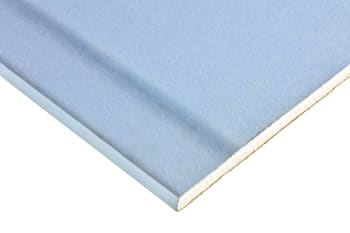

What is Plasterboard?
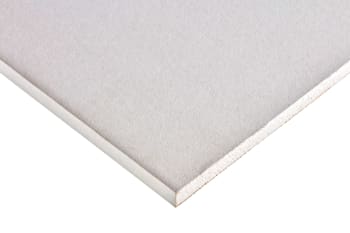
Plasterboard offers a "dry" alternative to traditional wet plastering, which is why it's often called "drywall". Instead of building up a wall surface with multiple coats of wet plaster that need time to dry, plasterboard provides a pre-made, dry panel. This panel has a gypsum plaster centre encased in strong paper, and it's simply cut and fixed into place to quickly form interior walls and ceilings.
It comes in a variety of specialised types to suit different needs, including moisture and fire resistance, as well as acoustic and thermal insulation. This makes plasterboard a reliable base for a wide range of interior finishes.
The most common thickness is 12.5mm, and it is available in both square and tapered edge forms, offering flexibility for various construction and design requirements.
Standard Plasterboard Application
Standard plasterboard sheets can be easily fixed to the wall, timber/metal partitions (with mechanical fixings) and various brick/masonry constructions using the "dot and dab" method, in which plasterboard is applied to the surface of the walls or insulation with adhesive.
Benefits of Using Plasterboard Over Plaster
- You don’t need to be an expert to install the boards correctly. Whilst it may take patience and effort to get the boards into the correct position on the wall, you’ll catch on fast.
- The straight, smooth finish of the boards promises a clean and flush base on which to decorate.
- It is faster, cheaper, and less labour-intensive than applying plaster.
- In terms of thermal efficiency, drywall has a slight edge over plaster.
- Drywall can easily be cut into when making in-wall repairs - these holes are then easy to fix.
Types of Performance Plasterboard
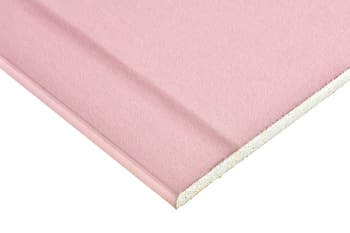
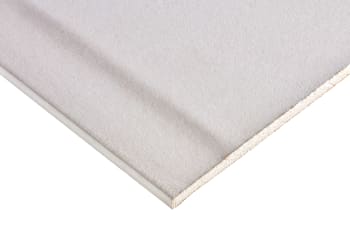
- Fire-Resistant Plasterboard: Buys vital time for residents to escape and survive fire break-outs. It feature an aerated gypsum core reinforced with glass fibre and other elements before being strongly sealed to pink paper, hence the common “pink plasterboard” label.
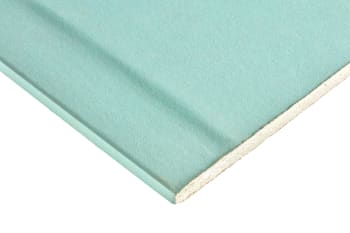
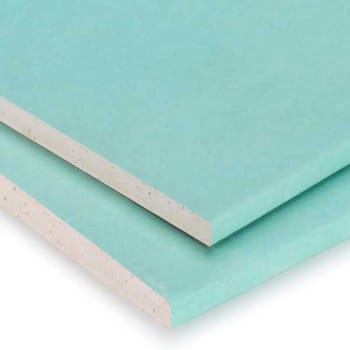
- Moisture-Resistant Plasterboard: Packed with moisture-resistant additives to battle dampness and moisture in walls and ceilings, helping to prevent damage in wet areas like kitchens and bathrooms. Designed for direct tiling application (with no surface preparation required), these drywall green boards should be used in conjunction with other drywall components to create partition and ceiling systems that resist moisture.
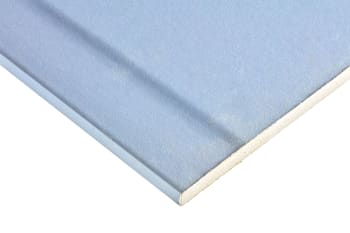
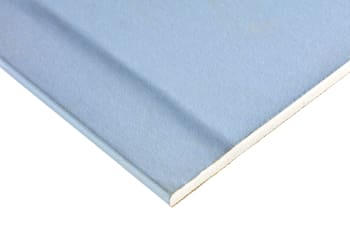
- Sound-Proof Plasterboard: Sometimes called acoustic plasterboard, or noise-reducing plasterboard, soundproof plasterboard prevents sound energy from travelling between rooms. Sound block plasterboard can markedly reduce the noise levels that penetrate the walls of a room, in either direction. Soundproof acoustic plasterboard features a much higher density core than standard plasterboard. It is this core which lends itself to the reduction of noise pollution; as sound energy struggles to travel through it, allowing for a noise reduction of between 30-50 decibels.
- Insulated Plasterboard: Comprise standard drywall plasterboard pre-bonded to an insulant. Although plasterboard is not most commonly known for its thermal performance, insulation plasterboard offers the user the ability to install both the insulation and plasterboard in one operation, offering drylining and added thermal insulation benefits.
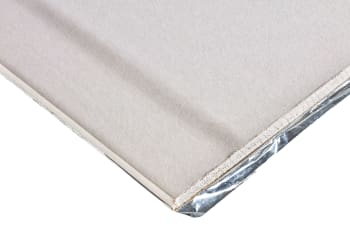
- Vapour Control/Vapour Barrier Plasterboard: Is a specialised type of drywall or plasterboard used to manage moisture and prevent the movement of water vapour between different building spaces. It plays a crucial role in maintaining the integrity and insulation of a building by controlling the flow of moisture, which, if not properly managed, can lead to various issues such as condensation, mould growth, and reduced energy efficiency.
Edge Types
- Tapered Edge (TE): The long edges of a tapered edge plasterboard sheet are slightly tapered inwards. This design allows for joint tape (paper or fibreglass mesh) and jointing compound to be applied within the taper. When correctly filled and sanded, this creates a flat, seamless surface ready for direct painting or wallpapering. This is the most common edge type for general wall and ceiling applications where a "dry-lined" (tape and jointed) finish is desired.
- Square Edge (SE): All edges of a square edge board are cut square. These boards are typically used when the entire surface is going to be skimmed with a thin (2-3mm) coat of finish plaster to achieve a traditional smooth plastered look. They can also be used for applications where visible joints are acceptable or will be covered by trim, or in multi-layer systems where the joints are staggered.
Working with Plasterboard: Installation Techniques
- Handling: Plasterboard sheets are large and can be heavy and prone to damage if mishandled. Ideally, they should be carried on their edge by two people. Store sheets flat and dry, well-supported to prevent bowing.
- Cutting:
- Score and Snap: The most common method for straight cuts. Use a sharp utility knife and a straight edge (like a T-square) to score deeply through the face paper and slightly into the gypsum core. Then, apply firm pressure to snap the board along the scored line. Finally, cut through the backer paper.
- Plasterboard Saw (Pad Saw): A fine-toothed hand saw used for cutting more intricate shapes, curves, or openings for electrical sockets, switches, and light fittings once the board is in place or before fixing.
- Power Saws (Jigsaw/Drywall Cut-out Tool): Can be used for speed and complex cuts, but generate more dust. Always use appropriate blades and dust extraction.
- Fixing:
- To Timber Studs/Joists: Use specialised drywall screws (typically black phosphate drywall screws coated with a bugle head). Select a length that allows for at least 25mm penetration into the timber framing. Screw heads should be driven slightly below the paper surface without tearing it, creating a slight dimple for filling.
- To Metal Studs/Framing: Use fine-thread, self-tapping drywall screws specifically designed for metal framing.
- "Dot and Dab" (Direct Bond to Masonry): Apply dabs of plasterboard adhesive (gypsum-based) to the masonry wall at regular intervals. Press the plasterboard sheet firmly and evenly into the adhesive, using a long straight edge and spirit level to ensure it is plumb and flat.
Which Plasterboard Do I Need for My Room?
Choosing the right drywall is essential for a safe, durable, and building-regulation-compliant finish. Because different areas of your home face unique challenges - from heavy moisture to fire risks - using standard wallboard everywhere can lead to costly repairs down the road.
If you aren't sure which board to add to your basket, use our quick room-by-room guide to find exactly what you need:
- Bathrooms and Wet Rooms (Moisture Resistant Plasterboard): Standard drywall will absorb moisture and crumble over time. For bathrooms, you need moisture-resistant boards (often called green boards). They feature a water-repellent core that prevents dampness and mould growth, making them the perfect, rigid backing for heavy wall tiles.
- Kitchens (Moisture Resistant & Fire Rated): Kitchens generate a lot of steam and condensation, making moisture-resistant plasterboard the best choice for general walls and ceilings. Note: Check your local building regulations, as you may be required to install fire-rated plasterboard directly behind hobs and ovens.
- Attached Garages (Fire Rated Plasterboard): If your garage is attached to your house, building regulations require a dedicated fire barrier between the two spaces. Fire-rated plasterboard (pink board) contains glass fibres in its core that maintain the wall's structural integrity for longer during a fire, helping to slow the spread of flames into your home.
- Loft Conversions (Insulated & Fire Rated): Lofts require a strict combination of boards. Insulated plasterboard should be used against the roof slopes to regulate temperature, keeping the room warm in winter and cool in summer. Meanwhile, fire-rated plasterboard is typically mandatory for the ceilings and designated fire escape routes to meet safety codes.
- Party Walls and Shared Walls (Soundproof Plasterboard): If you want to block out noisy neighbours - or keep your own noise contained - use acoustic plasterboard (blue board). It features a much higher density core than standard wallboard, making it highly effective at blocking airborne noises like loud talking, music, or televisions from bleeding through the walls.
- Living Rooms, Bedrooms, and Hallways (Standard Wallboard): If you are building standard internal partition walls that don't need special protection against moisture, fire, or sound, standard wallboard is all you need. It is the most cost-effective and versatile option for general home drylining.
Frequently Asked Plasterboard Questions
Do I Need To Plaster Drywall/Plasterboard?
No, plasterboard does not strictly need to be plastered. You have two options for finishing a plasterboard wall:
- Taping and jointing (Drylining): A faster, DIY-friendly method where you only cover the seams and screw holes with jointing compound, then sand them smooth for painting.
- Skimming: The traditional method where a thin layer of wet plaster is applied over the entire board. While it takes longer to dry and usually requires a professional, it provides a harder, more durable finish.
Can You Paint Plasterboard?
Yes, you can paint plasterboard, and it's a common practice in interior finishing and decoration. Steps include preparing the surface, applying primer, and using the desired paint for your walls or ceilings.
How Thick Is Plasterboard?
Plasterboard thickness can vary from 9mm to 102mm, depending on your specific needs. Typically, standard plasterboard thicknesses for ceilings fall within the range of 9.5 mm to 12.5 mm, while for walls, the thickness can range from 12.5 mm to 15 mm.
Can You Tile Onto Plasterboard?
Yes, you can tile onto plasterboard, but it's essential to follow proper installation procedures to ensure a secure and durable tile surface.
Typically, this involves applying a suitable tile adhesive and using appropriate wall tile backer boards or waterproofing materials to protect the plasterboard from moisture damage.
Proper preparation and adhesive selection are crucial for successful tile installation on plasterboard surfaces.
Is Plasterboard The Same As Drywall?
Yes. Plasterboard goes by several names including gypsum board, drywall, wallboard or wall panels.
Related Articles

Plasterboard Types Explained: Standard, Fire, Moisture & More

How to Install XPS Insulation

How to Fill Holes in Plasterboard

How To Build A Media Wall

What Is Plasterboard Made Of?

Tapered or Square Edge Plasterboard?

The Versatility of Plasterboard for Bathrooms

How To Build a Shed

How To Cut Plasterboard: A Step-by-Step Guide

How To Fix Plasterboard