

Insulation Rolls
(24 Products)Insulation rolls provide a flexible, continuous thermal and acoustic barrier designed for rapid installation across expansive spaces. Suitable for timber joists, stud walls, and loft floors, this fibrous rolled insulation effectively traps air to impede heat transfer, regulate indoor temperatures, and deliver long-lasting energy efficiency for the building envelope.



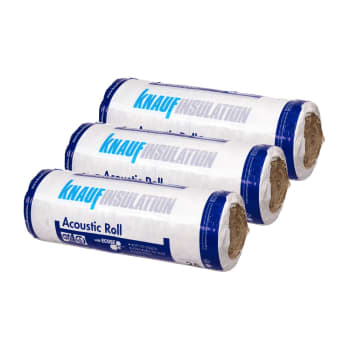


Understanding Insulation Rolls
Insulation rolls are manufactured as continuous lengths of flexible, fibrous material, engineered to provide substantial thermal and acoustic resistance within a building envelope. By creating a dense matrix that traps millions of minute air pockets, rolled insulation fundamentally impedes the transfer of heat. During colder months, this thermal barrier retains generated heat, while in warmer conditions, it limits heat gain from the exterior, ensuring a stable indoor climate and reducing the demand on HVAC systems.
The products available encompass two primary forms of mineral wool, each tailored to specific site requirements. Fibreglass insulation features low-density, flexible fibres spun from recycled glass, making it highly compressible and ideal for achieving strict U-values in unobstructed loft spaces and pitched roofs. Conversely, mineral wool insulation manufactured from spun volcanic rock delivers increased density. This denser rock wool configuration excels in acoustic attenuation and compressive strength, making it the preferred choice for soundproofing room-to-room partitions and separating floors.
Designed for efficiency on site, these flexible rolls can be easily measured, scored with a utility knife, and friction-fitted between standard timber structural members. Because the material does not slump or degrade over time, it establishes a reliable, set-and-forget barrier that enhances both the fire safety and overall energy performance of the property for its entire lifespan.
Material Range
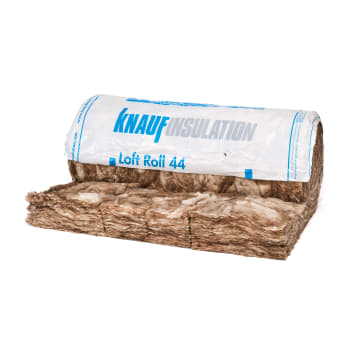
- Loft Insulation Rolls Lightweight, low-density glass mineral wool designed for maximum thermal performance and ease of handling in unobstructed roof spaces, featuring standard thermal rolls for friction-fitting between and over timber joists.
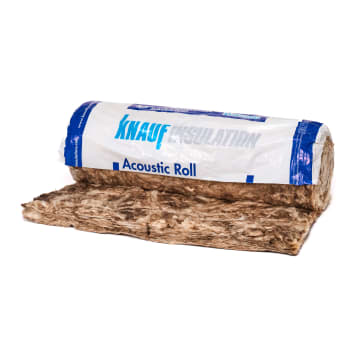
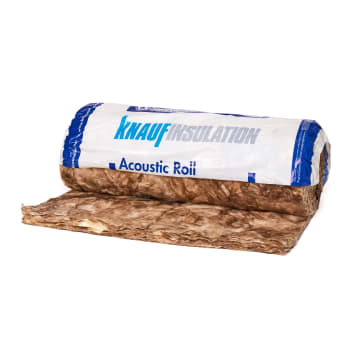
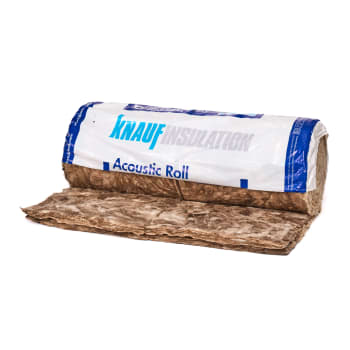
- Acoustic Insulation Rolls Higher-density rock mineral wool engineered to absorb airborne and impact sound, featuring heavy-duty acoustic rolls ideally suited for internal stud partitions, separating walls, and intermediate timber floors where noise reduction is critical.
Performance Benefits
- Thermal Regulation Traps air within a fibrous matrix to significantly slow heat transfer, retaining winter warmth and blocking summer heat gain to lower overall energy consumption.
- Fire Safety Manufactured from inherently non-combustible mineral fibres, achieving top-tier Euroclass A1 fire ratings to enhance the passive fire protection of the building.
- Acoustic Attenuation The dense, fibrous structure actively breaks down sound waves, reducing both airborne noise transmission and impact vibrations between rooms.
- Dimensional Stability Engineered to maintain its structure over decades, the material will not slump, sag, or lose its insulative performance within the structural cavity.
- Straightforward Installation Highly flexible formats allow the material to be cleanly cut and friction-fitted between timber members without the need for specialist mechanical fixings.
Typical Applications
- Loft and Attic Upgrades Rolling directly between and over the top of existing timber ceiling joists to meet modern thermal U-value targets in cold roof spaces.
- Timber-Frame Separating Walls Friction-fitting into internal stud partitions to reduce room-to-room noise transmission and provide a secondary thermal barrier.
- Suspended Timber Floors Insulating the voids beneath internal and ground-floor timber floorboards to cushion footfall and block cold draughts.
- Pitched Roof Rafters Pressing continuous lengths between pitched roof structural timbers prior to boarding, providing critical thermal retention in habitable attic spaces.
Specification & Standards
- BS EN 13162 Thermal insulation products for buildings. Factory made mineral wool (MW) products. Specification.
- BS EN 13501-1 Fire classification of construction products and building elements, detailing the criteria for Euroclass A1 non-combustibility.
Related Materials and Construction Uses
Insulation rolls are foundational components within timber-frame and cold roof assemblies, designed to integrate seamlessly with wider moisture management and structural systems.
When installed in external walls or roof pitches, they are typically used alongside vapour control layers (VCLs) on the warm side of the insulation to prevent interstitial condensation, and breathable roofing membranes on the cold exterior side to allow moisture vapour to escape. Furthermore, they work directly in tandem with structural timber framing, plasterboard, and acoustic floor decking to create complete, high-performance partition walls and separating floors.
Frequently Asked Insulation Rolls Questions
How Do I Choose the Right Thickness for Insulation Rolls?
The right thickness of insulation depends on the level of thermal performance you need, which varies based on your climate zone and the part of the house you are insulating.
Lower thermal conductivity values indicate better insulating properties and are recommended for colder climates.
Can Insulation Rolls Be Used in Any Part of a Home?
Yes, insulation rolls can be used in various parts of a home, including attics, walls, and crawl spaces. Ensure the insulation material is suitable for the specific application, especially concerning moisture and fire resistance.
How Do I Install Insulation Rolls?
To install insulation rolls, measure the area to be insulated, cut the insulation to size using a sharp utility knife and straightedge, and fit the insulation snugly between joists or studs.
Use staples to secure faced insulation rolls with a vapour barrier.
Can Insulation Rolls Be Layered for Extra Efficiency?
Yes, you can layer insulation rolls for improved thermal performance. Make sure that the combined thickness does not compress the underlying layers, as compression can reduce the overall effectiveness of the insulation.
Do Insulation Rolls Have a Shelf Life?
Insulation rolls do not have a specific shelf life as long as they are kept dry and are not mechanically compressed. Store them in a dry area to maintain their insulating effectiveness over time.
What Is the Difference Between Unfaced & Faced Insulation Rolls?
Faced insulation has a vapour barrier attached to one side, typically made of kraft paper or foil, which helps control moisture.
Unfaced insulation does not have this barrier and is used where vapour control is not necessary or when adding insulation to existing insulation.
What Tools Do I Need To Cut Insulation Rolls?
- Sharp utility knife
- Straightedge or ruler
- Tape measure
- Work gloves and safety goggles
- Dust mask or respirator
Related Articles

How to Insulate a Shed

How to Insulate a Loft

Cavity Wall Insulation Installation

How To Cut Insulation Rolls

Timber Frame Construction

How To Soundproof A Floor