

9.5mm Plasterboard
(3 Products)9.5mm plasterboard is the standard "thin-coat" specification designed for lightweight applications and overboarding existing surfaces. This thickness is primarily selected for its low profile, making it a critical material for renovation projects where maintaining ceiling height or wall depth is a priority.

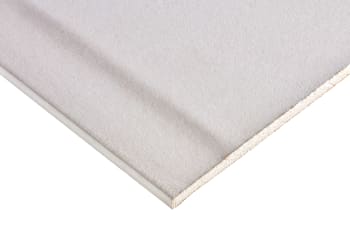
Engineering & Specification Requirements
Specifying 9.5mm plasterboard is a technical decision driven by weight and clearance constraints. It is significantly lighter than the standard 12.5mm or 15mm alternatives, which reduces the structural load on timber joists - a vital consideration for older properties or DIY ceiling repairs. The reduced mass makes it the industry standard for "overboarding," where new boards are fixed directly over failing lath-and-plaster or damaged existing boards to provide a fresh, flat skimming surface.
In new-build scenarios, 9.5mm board is rarely used for primary wall linings due to its lower resistance to impact and bending compared to thicker grades. However, it remains a specified material for curved wall applications; the 9.5mm thickness offers greater flexibility, allowing it to be gently bent to a radius that thicker boards cannot achieve without snapping. When installed on ceilings, it must be fixed at closer centres (typically 400mm) to prevent sagging between joists over time.
Application & Format Selection
- Ceiling Overboarding: 9.5mm Square Edge boards fixed through existing ceilings into joists to create a stable base for a new plaster finish.
- Curved Partitions: 9.5mm boards utilised in bespoke commercial or residential designs where a radius or sweep is required.
- Temporary Linings: 9.5mm Wallboard used for non-structural partitions or exhibition stands where speed of installation and ease of transport are required.
- Small Patch Repairs: 9.5mm sections for "making good" areas where existing shallow-depth boards have been removed.
Frequently Asked 9.5mm Plasterboard Questions
Is 9.5mm plasterboard strong enough for ceilings?
Yes, 9.5mm is widely used for overboarding ceilings or for new ceilings where joist centres are 450mm or less. If your joists are at 600mm centres, a 12.5mm board is generally recommended to prevent the board from bowing under its own weight or the weight of the plaster skim.
Can I use 9.5mm plasterboard for a bathroom?
Standard 9.5mm wallboard is not moisture-resistant. For bathrooms or areas of high humidity, you should specify "Moisture Board" (usually green-faced), which is typically available in 12.5mm thickness to comply with British Standards for wet-room substrates.
What is the difference between tapered edge and square edge 9.5mm boards?
Tapered edge boards have a slight dip at the long edges to allow for jointing tape and filler to be applied flush with the board surface. Square edge boards are butted together and are typically chosen when the entire wall or ceiling is going to be covered with a 2-3mm coat of finishing plaster (skimming).
Related Articles

How To Build A Media Wall

What Is Plasterboard Made Of?